
From the streets of Barcelona’s Poblenou to the silence beneath the waves, Peli ambassador Daniel Illescas has turned an early instinct for visual storytelling into a career built around travel, adventure and the sea. A model, content creator and the man who held his breath for almost five minutes on national television, Daniel shares the world as he sees it with a community of millions.
Daniel’s story did not begin on a film set or in a far-flung destination, but behind a shop counter in Barcelona. Born in Santa Perpètua de Mogoda in 1993, he went to live with his grandmother Carmen in the Poblenou neighbourhood at the age of 16, the same age at which he opened a Fotolog account and began sharing his first modelling photographs. What started as a hobby slowly became a profession: agency work followed, then a growing audience, and eventually a career that today reaches nearly 1.7 million followers on Instagram and 1.6 million on TikTok.
His content moves between remote destinations, underwater worlds and quiet moments of reflection, but the thread running through all of it is a restless desire to discover how far he can go. In 2026, that drive carried him to victory in the sixth season of Antena 3’s El Desafío, where he also set a television record in static apnea. In this conversation, Daniel reflects on how a hobby became a career, what those final seconds without air taught him about the mind, why the right gear matters when you work in the toughest conditions, and the legacy he hopes to leave.
You opened a Fotolog account at sixteen, while working as a shop assistant, and it became the doorway into fashion and, eventually, into a life built around travel. Was there a specific moment when you realised this could be a career rather than a hobby, and how has what you want from it changed since?
I started very young, using social networks like Fotolog, then Facebook and eventually Instagram. I was 16 and, at that point in my life, I didn’t really know what I wanted to do. I was already getting into fashion, I loved posing and I had always felt very comfortable in front of a camera, so I began sharing my modelling photos simply because I enjoyed it.
There wasn’t one specific moment when I suddenly thought, “This is going to be my profession.” It happened gradually. I joined an agency and started getting occasional modelling jobs, but social media was still just a hobby and it wasn’t something I could rely on financially. For quite a long time, I combined those opportunities with my job at Hollister.
Eventually, the work became more consistent and I realised that it could become a real career, although I could never have imagined where it would take me. What started as something fun is now my profession, so today I approach it very seriously. I always want to give one hundred per cent and create the best content I possibly can.
With so many people sharing their travels online today, yours has a voice that is unmistakably your own: remote destinations, time underwater and moments of genuine reflection. What are you hoping to share when you’re out there with a camera, and how do you keep it true to what you’re really living?
There are more and more people sharing their travels online, but I think my content has its own essence. I love using images and videos to transmit something and to inspire people to travel.
I especially like the idea that someone who cannot travel can still discover incredible places through my photographs and videos. I want to show people the world through my eyes and through my creativity.
My style is very personal, but it isn’t something I force. It comes naturally because I have always loved art and expressing myself through images. Staying authentic is simply about showing what I’m genuinely experiencing, in the way I naturally see it.
Building a loyal community also takes time. I have been working in social media for around twelve years, being consistent and gradually developing that identity. Over all those years, people have come to know me, understand my style and recognise when something truly comes from me.
Water runs through so much of your life, from your passion for diving to the record you set on El Desafío, holding your breath for 4:47 minutes having never tried static apnea before. Take us into those final seconds. What was going through your mind, and what did the experience teach you about the distance between a physical limit and a mental one?
I have always been someone who wants to push his limits, go a little further and experience things that feel unique or extreme. I like discovering how far my body and mind can go.
I approached El Desafío as a very personal challenge and committed myself completely to every test. The breath-hold challenge was the hardest one, and managing to hold my breath for 4 minutes and 47 seconds and set the television record was something incredible.
During those final seconds, you are fighting against your own body. Your body is telling you to stop, but mentally you have to keep going because you know you are still capable of more. It becomes a constant battle with yourself.
That experience taught me that the mental side is the hardest part. For me, static apnea is probably 95 per cent psychological. Your physical limits are there, of course, but very often your mind tells you to stop before your body has actually reached its true limit.
The sea has also always been a very important part of my life. I grew up in Barcelona surrounded by it, I started diving when I was very young and I used to go fishing with my father. I have a very strong connection with the ocean. I love being close to it, but I love being beneath the surface even more. Marine life fascinates me, and being able to show people the world that exists underwater is one of my greatest passions.
With nearly 1.7 million followers on Instagram and 1.6 million on TikTok, you reach more people than live in most European cities. How has your sense of responsibility towards that audience changed as it has grown, and what goes through your mind before you post?
Having millions of followers is not something that happens in one day, one year or even two. It is the result of many years of work, consistency and taking social media seriously as a profession.
I have always tried to give one hundred per cent and produce the highest quality possible so that people value what I share. I have always tried to go beyond the most immediate type of content and create carefully produced images using professional cameras and equipment.
There are many hours, a lot of dedication, constant travelling and a huge amount of work behind those numbers. Much of that work is never seen, but it is what has allowed me to develop my own style and capture unique moments.
Of course, having such a large community brings responsibility. When millions of people follow you, what you say and do can reach a huge audience, so I believe things have to be done properly. I have always taken great care of my image and tried to make sure that what I share genuinely represents me.
Before publishing something, I ask myself whether it comes naturally and whether it feels like part of who I am. Some things are more spontaneous and others are carefully produced, but I am normally very clear about what I want to share and what I don’t. After following me for so many years, people know me very well and can recognise what is truly authentic to me.
Between remote expeditions, dives and constant filming, gear is not optional; it is essential. What do you value most about Peli products, and how do they fit into the way you work when you’re travelling?
Creating content in remote destinations and during expeditions is never easy. Transporting all the equipment makes everything even more complicated, and experience teaches you what you really need to bring and how important it is to protect it properly.
The cameras and technology I travel with are extremely valuable. They are one of the biggest investments I make in my work, so carrying professional equipment without giving it the right protection would make no sense.
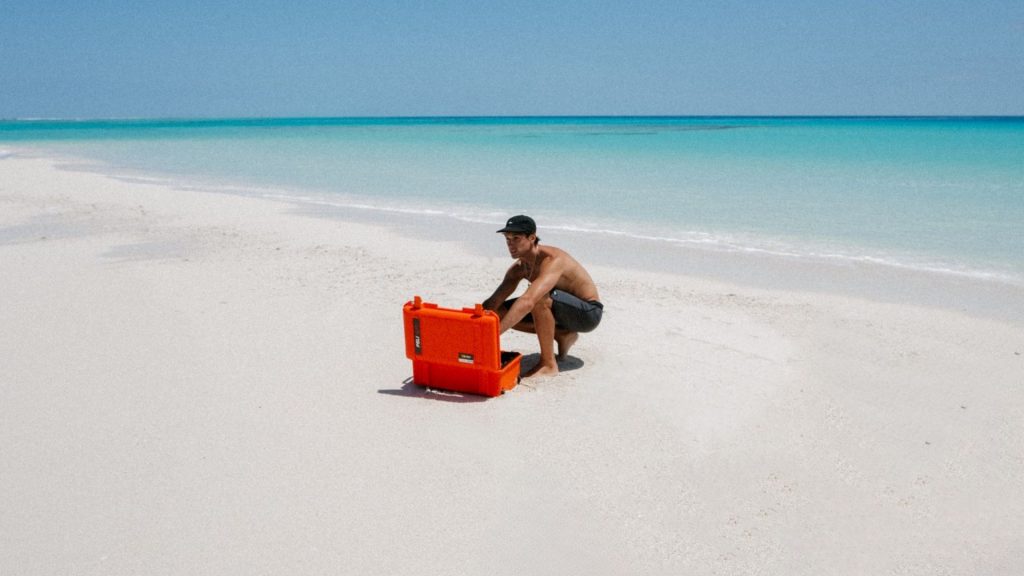
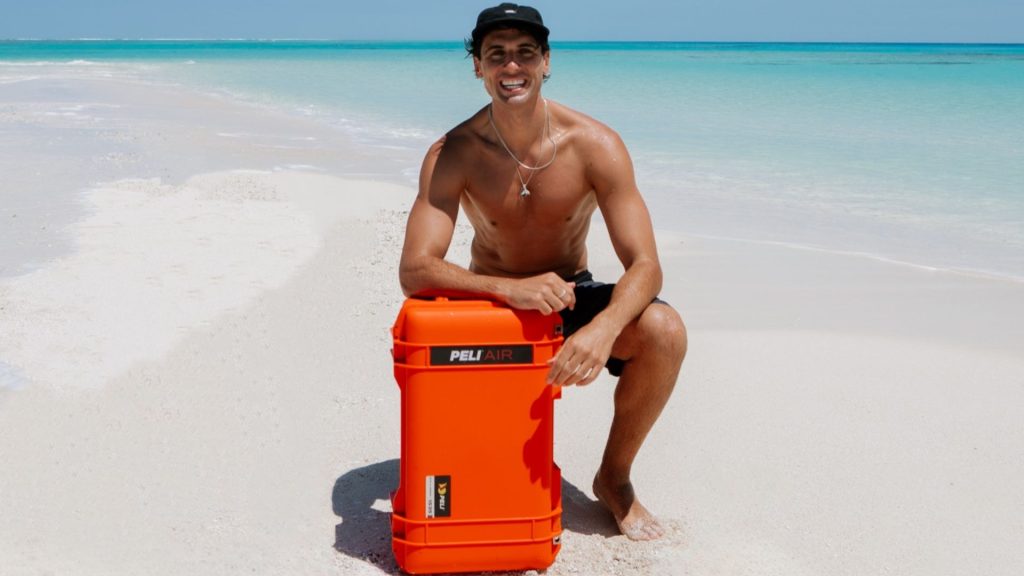
That is why my Peli case always travels with me. I go to extreme places with completely different temperatures and conditions. My equipment can be exposed to impacts, mud, seawater, snow, cold and many other difficult environments. Knowing that everything is properly protected allows me to travel and work with confidence.
Having an amazing camera setup is essential, but great equipment means very little if you cannot keep it safe. For me, Peli is what allows that equipment to arrive protected and ready to work, wherever the journey takes me.
Your grandmother Carmen took you in as a teenager, and you’ve made it your mission to fulfil some of the dreams she never had the chance to experience. Beyond the records and the audience, what legacy do you hope to leave for the next generation, both through the causes you support and in the way you encourage people to go and see the world for themselves?
I went to live with my grandmother Carmen when I was 16, and she is the most important person in my life. Being able to fulfil some of her dreams and travel with her, including our trip to Japan, has been my way of thanking her for everything she has done for me.
It became a very beautiful personal project, but sharing it also allowed us to inspire many other people to do something similar with the people they love, whether that means their grandparents, their parents or someone else who has always been there for them.
Sometimes we become so focused on our own lives that we forget the people who truly matter. I have spent a large part of my life travelling, but I have never forgotten my family or the people who love me, especially those who may never have had the same opportunities.
I didn’t want something to happen to my grandmother before she had the chance to live experiences that I was now able to give her. Sharing that journey inspired other people to create memories with their own loved ones, and I think that is one of the most beautiful things social media can achieve.
The legacy I would like to leave goes beyond inspiring people to travel. We have an incredibly powerful platform, and I believe we should also use it to support social causes, protect the environment, help animals, work with foundations and NGOs, and remind people to take care of those they love.
Social media can show beautiful places, but it can also be used to contribute something meaningful to society. That is the part I would most like people to remember.
Daniel Illescas shows that a career built in front of the camera can rest on something far more solid than numbers. Whether he is exploring life beneath the waves, carrying his cameras to the far corners of the world or claiming victory in El Desafío, one of the most talked-about television competitions in Spain right now, his work is driven by the same blend of discipline, curiosity and loyalty to the people who have always been by his side.
As he continues to explore new horizons above and below the water, one lesson stays with him: the mind often asks us to stop long before the body has reached its true limit. For Daniel, going a little further is not just a challenge. It is a way of life.
Connect with Daniel:
Instagram: https://www.instagram.com/danielillescas/