
From the frozen silence of Antarctica to the high-pressure world of global advertising campaigns, Peli ambassador Álvaro Sanz has spent more than twenty years telling human stories through the lens. A photographer and documentary director in equal measure, Álvaro moves fluidly between commercial productions and the world’s most extreme landscapes, always in search of the same thing: beauty, light, and truth.
Some people are drawn to stillness. Álvaro Sanz is drawn to motion. Raised in a small coastal town in Tarragona, Catalonia, he discovered early on that a camera could channel his boundless energy into something lasting, and he has been following stories ever since. Over more than three decades, that pursuit has carried him from advertising sets working with some of the world’s best-known brands to remote refuges in the Pyrenees, the Himalayas, and the polar regions.
His work rests on three pillars: commercial photography, documentary directing, and a deep, almost instinctive pull towards the mountains, the ocean, and wild nature. Across all of them runs a single thread: an obsession with authenticity and a refusal to sit still. In this conversation, Álvaro reflects on the evolution of his craft, the discipline that extreme environments demand, and why the gear he trusts is never an afterthought.
You’ve spent over two decades working across commercial photography, documentary filmmaking, and wild landscapes. Looking back, what first drew you to storytelling through the lens, and how has that pull evolved over the years?
I’ve gone through several phases in my desire to tell stories through the camera. First came a fierce need to channel all my energy. I’m someone with a very high dose of it, and I need to burn it off. When I discovered that with a camera I could follow stories, follow people, and tell them, I started working hard so I could dedicate myself to it. That was more than 30 years ago now, so I’ve been through many phases since.
There came a point when I realised I could travel through my work, and I became obsessed with moving, with covering the world. Luckily, you mature, and you realise there’s no point spending energy and time travelling just for the sake of travelling. Now I’m much more deliberate about the projects I take on, the trips I make, and the reasons that lead me to shoot photographs and documentaries. Now, I look for meaning in what I do.
You’ve collaborated with major global brands as a commercial photographer while also directing documentaries in some of the most extreme environments on Earth. How do you move between these two worlds, and what does each teach the other?
As a photographer and as a director of documentaries and advertising campaigns, I’m lucky enough to work in the world of image-making from different angles, and each one gives me something different. With global ad campaigns for well-known brands, you reach a certain level of pressure, with everyone sending you documents, briefs, last-minute changes. You really have to learn to manage your energy and your emotions.
That’s why when I travel to shoot documentaries and there are last-minute changes, unexpected things, I’m the most adaptable person, the one who complains the least, because in the end I’ve learned that in this work of ours nothing is predictable, and the final image is the result of how we adapt to situations. If we become obsessed with achieving something very specific, my work stops being fun for me.
Your documentary work has taken you to places like Antarctica, Alaska, and the Himalayas. What is it about these remote, extreme landscapes that keeps calling you back?
I’m from a town of 3,000 people on the coast of Tarragona, in Catalonia. I grew up by the sea, and at home we’ve always had a sailboat. But for some reason, I discovered that I belong to the mountains, to the snow, to the cold, to the extreme. In extreme conditions I function better, and I realise I have real endurance in my work.
On top of that, all my reference points from my teenage reading, and still today, are writers who wrote about the cold, like Jack London. A frozen landscape genuinely inspires me far more than a beach.
You work with the same passion on a major production as you do in a mountain refuge with no signal. What does that adaptability demand of you, both creatively and personally?
People who know me know I’m very passionate and full of energy. If I’m going to do something, I have to do it with all my passion and energy. I might do it well or badly, but always with drive, because I’m incredibly fortunate to make a living doing what I do. So the least I can do is be grateful to my clients for letting me do this.
I clearly enjoy shooting a campaign for a mountain clothing brand in the Atlas Mountains of Morocco more than shooting an ad on the outskirts of Madrid for a cosmetics brand, but one feeds the other, and both add up, financially and in terms of what I learn. So one of my principles is that if you say yes to something, it’s a yes in capital letters.
On expeditions like yours, gear is not optional, it is essential. What do you value most about Peli products, and how do you rely on them when working in remote or extreme conditions?
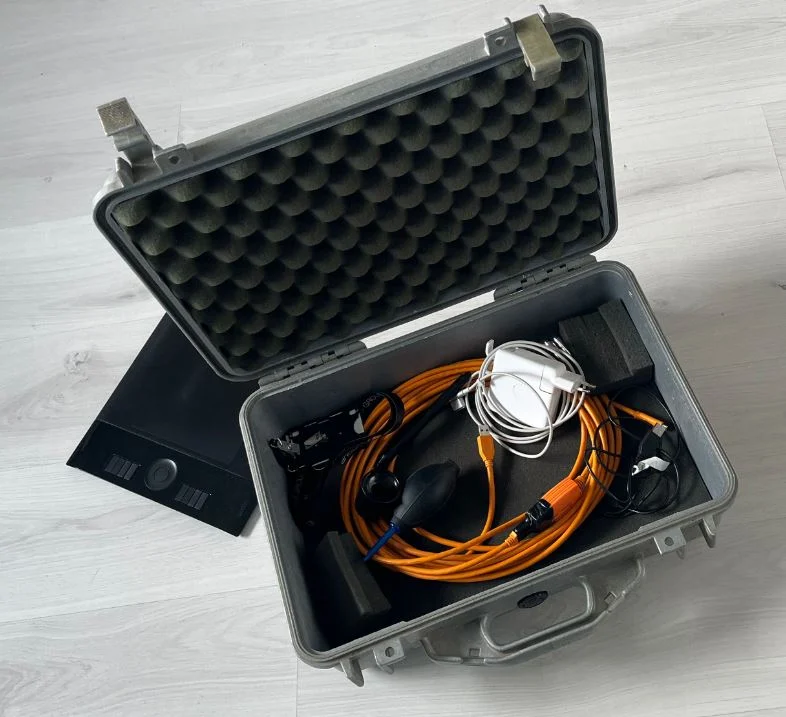
It’s clear I can’t work without my gear. If a camera fails, a lens, or even a simple cable, the whole shoot can be affected. Since I often travel to remote places or extreme conditions, I’ve always trusted Peli products for transport. I started with the iconic 1510, but little by little I expanded my gear and started adding more cases to my collection.
I know that each kit lives in its own case, ready to go straight to set, and that everything inside won’t shift, won’t get damp, and won’t take a hit. With expensive, delicate equipment like ours, that’s essential. And let’s be honest, there’s nothing quite like loading the back of the van with Peli cases full of gear.
After more than twenty years spent chasing light, truth, and beauty in some of the world’s most extreme places, what legacy do you hope to leave for the next generation of storytellers and adventurers?
Honestly, one of the things that matters most to me, and that I try to convey in my talks, even if it sounds contradictory or hard to believe, is that you don’t need to go far to tell great stories, take great photographs, or live incredible experiences. During the 2020 pandemic, I got some of the most incredible assignments of my career, and many of them were in Catalonia, in the Pyrenees.
One day I stopped in the Alt Pirineu and asked myself: what does this place really have that’s different from Alaska, beyond the reindeer and bears? In terms of emotion, feeling, and light, I couldn’t find an answer. I think young people should value and intensely live what’s close to them before setting off on trips to remote places, unless they have a very clear reason for that specific destination.
Álvaro Sanz reminds us that great storytelling is not about how far you travel, but about how fully you commit to what is in front of you. Whether that means the ice fields of Antarctica or a valley an hour from home, his work is driven by the same restless curiosity and the same reverence for light, emotion, and honesty.
As he continues to move between worlds, from major productions to signal-less refuges, one principle remains constant: when he says yes to a story, it’s a YES in capital letters.
Connect with Álvaro Sanz:
Website: dealvarosanz.com
Instagram: @dealvarosanz